Keeping the Umami, Removing Only the Caffeine: Decaf Made in Japan
SCAJ2026, Asia's largest specialty coffee trade show, was held recently. This year's theme was "Brew the Future." This time, we bring you an interview about a Geisha decaf, shown at the event, that keeps its umami through supercritical carbon dioxide processing, and about the decaf research Yuko Nirei has pursued for 30 years.
Translated from Japanese
GUEST
Yuko Nirei
Representative Director, UnCafeSucre Co., Ltd.
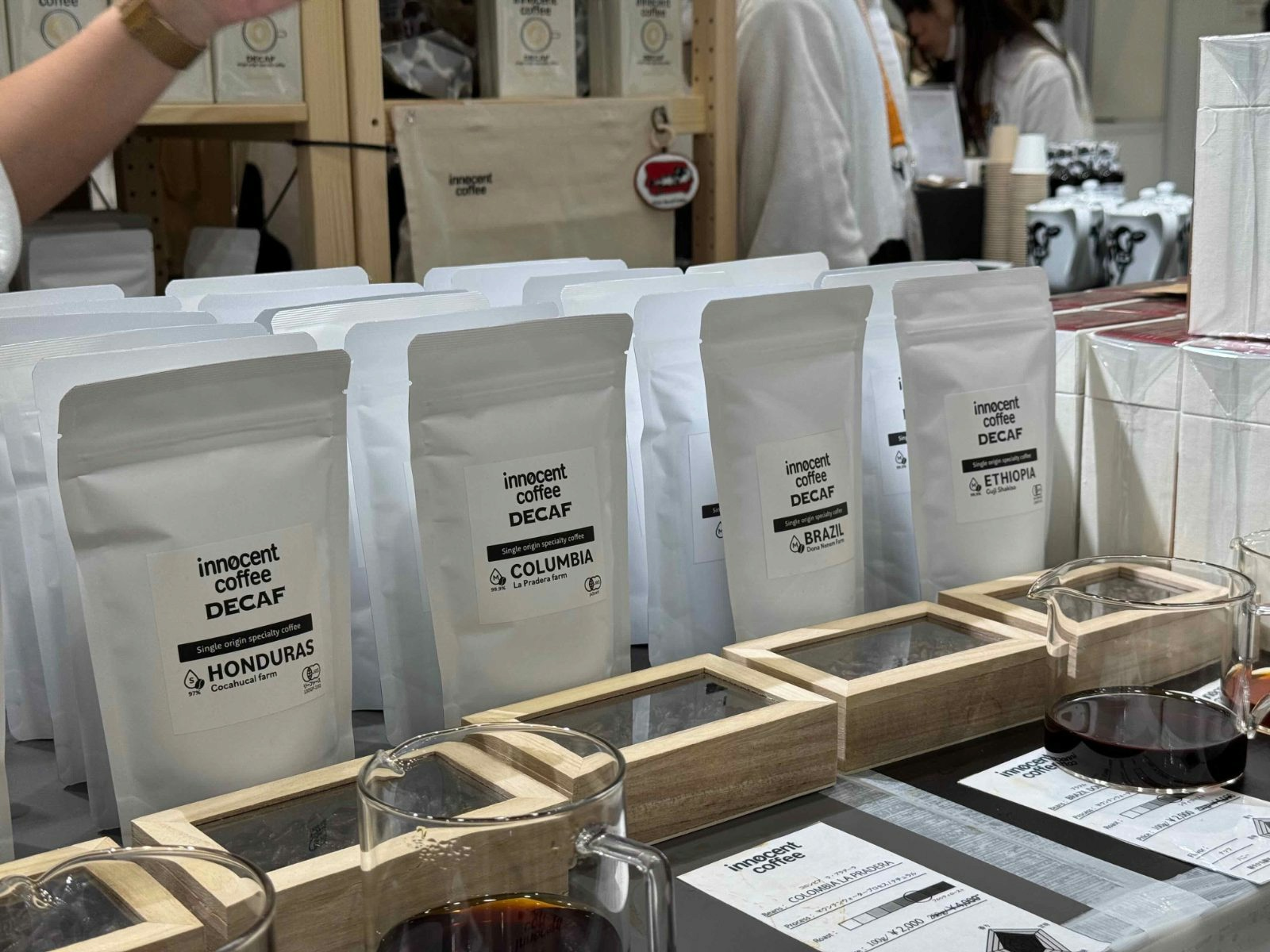
This time we visited a booth at SCAJ2026 (the trade show of the Specialty Coffee Association of Japan) that was presenting decaf (coffee with the caffeine removed) decaffeinated in Japan.
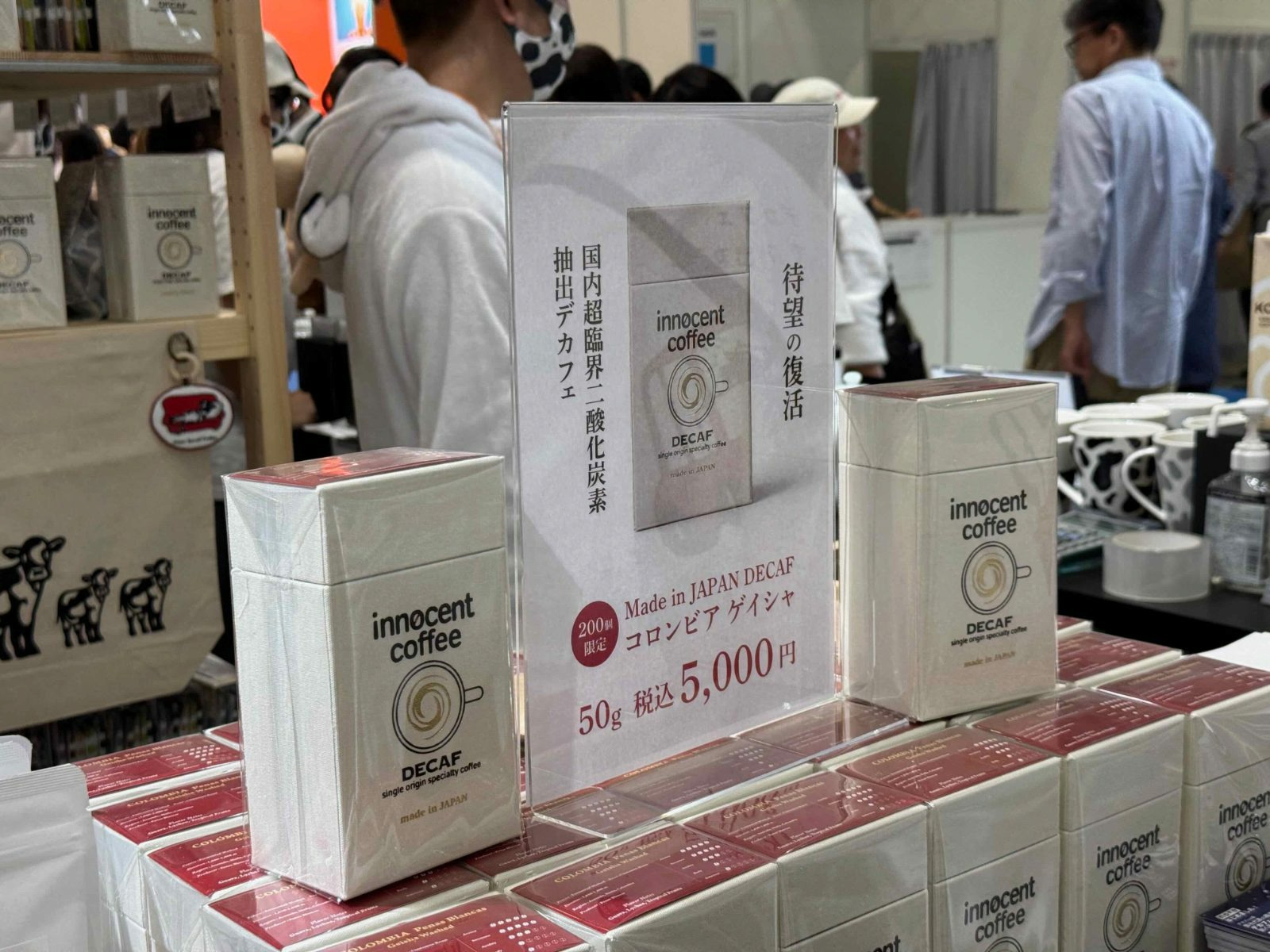
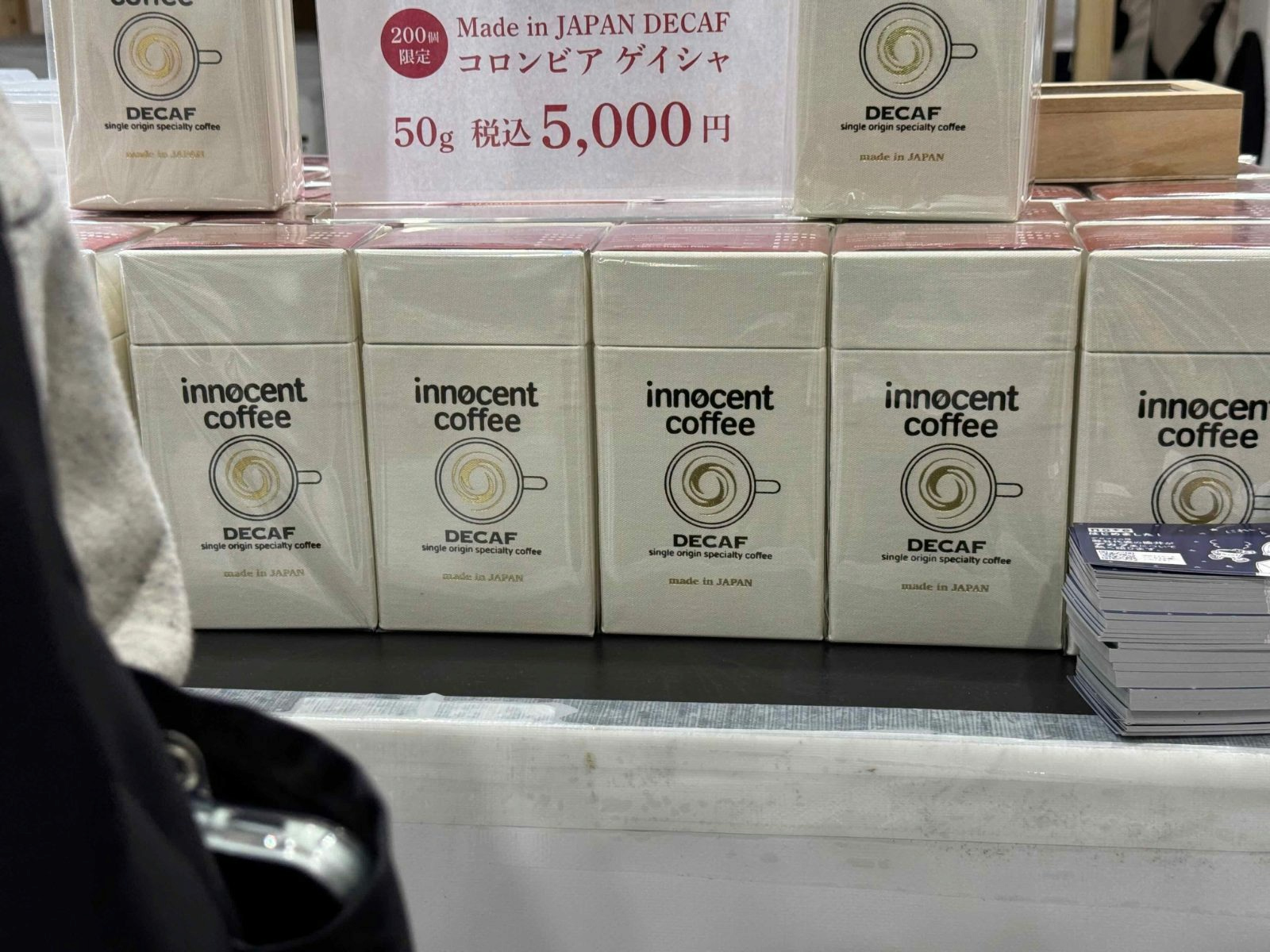
On display was a Geisha decaf processed with a method called supercritical carbon dioxide. We spoke with Yuko Nirei, Representative Director of UnCafeSucre Co., Ltd., which runs the decaf brand "innocent coffee."
She has researched decaf for nearly 30 years, opened the specialty coffee roastery café "Café Sucré" in 2004, and is called "the decaf person" wherever she goes. We asked her about decaf processing in Japan and how she got started with decaf.
Decaf made in Japan
――Is it rare in the first place for decaf to be processed in Japan?
Nirei: Yes. We make it together with a partner company. Small-scale sales started around 2018, and in 2020 a large machine for mass production was built. But that machine has now stopped running, and production continues on a small machine. Because we make it on that small machine, it ends up being quite expensive.
But right now there are only two places in the world doing this supercritical carbon dioxide processing: Italy, and this small one in Japan. It's a truly wonderful technology. Because of various conditions it can't be mass-produced, so I want to preserve this wonderful technology for the future.
The biggest difference from the decaf processing done overseas now is that supercritical processing can remove only the caffeine while keeping as much of the beans' umami as possible. The downside is that it's very costly. Building the machine is expensive, and so is running it, so it's hard for it to reach the wider world.
It was mass-produced once, but COVID put an end to that. So now I want to bring it back again and let everyone know how good it is, and although it's very high-end, we're selling a Geisha decaf (Geisha being a variety known for its floral aroma).
A Geisha decaf
――You can get decaf from big companies too. Where do customers find value in this?
Nirei: To make the difference between supercritical processing and the Swiss Water Process (a method that removes caffeine using water) easy to understand, we made it with Geisha rather than ordinary specialty coffee. Geisha is known for its sweet-tart, juicy character and its aroma, right? With other companies' methods that's really hard to bring out, so hardly anyone makes it.
But with supercritical processing, some of that juiciness remains. That's what's good about this coffee.
――When people think of decaf, they picture beans being soaked in water or something. How does supercritical processing work?
Nirei: There's air, gas, and there's liquid, right? A state right in between, with the properties of both a gas and a liquid, is called a critical state (more precisely, a "supercritical state," created by applying temperature and pressure above a certain level). We create that state. When carbon dioxide is in that state, it's as if the carbon dioxide picks out and removes the caffeine inside the coffee beans.
――Where is the processing done?
Nirei: In Kuwana, Mie Prefecture.
Thirty years of decaf research
Nirei: I've been researching decaf for nearly 30 years. In Japan, I'm sure I've been doing it longer than anyone. That's why I'm called "the decaf person" wherever I go, and I also write on note (a blogging service), like this.
I started note deliberately, now. It's only been about three months, but I've already posted more than 60 articles. Things AI can't know: we go out into the field, look into why people who drink decaf drink it, and collaborate with all sorts of people.
――Decaf is becoming a boom around the world now, isn't it?
Nirei: Rather than "around the world," in America and Europe decaf was already an ordinary drink 30 years ago when I started. Japan was behind. It actually began with me wondering why there was so little of it in Japan.
But as I looked into it, I got stuck on whether decaf was really reassuring, really safe, and that's where my own research began.
The reason it started, which I think many of you have also thought, is that a huge number of people believed decaf was something pregnant women drink. That's started to decline a little recently, but I'm still told, "That's a drink for pregnant women, isn't it?" No, decaf is not a drink for pregnant women. All sorts of people drink it in all sorts of ways, but something people drink as a matter of course in America and Europe had become, in Japan, something for pregnant women.
That's where my sense that something was off began. From questions like what ensures it is reassuring and safe, and why it's drunk overseas but so little in Japan, I researched like crazy. Wanting to spread awareness of decaf in Japan and help it grow is really how it began.
A shop women want to visit
――What was it that got you started with decaf in the first place?
Nirei: It was nearly 30 years ago, so Japan's coffee culture back then was kissaten culture. Starbucks had only just arrived, and it was an era when there weren't many cafés.
When you think of kissaten, they were places where mostly men smoked while reading magazines or newspapers and watching TV, right? I felt very out of place in that culture. When I entered the field intending to run a house-roasting coffee shop, I thought, huh, is this industry only men? The roasters, and the business owners too, were all men. Many of the products were made from a male point of view. I thought that was really strange.
I'm a woman and I drink coffee too, so I thought women could drink much more coffee, and there should be shops women want to visit. That's actually how it started. I decided to do the decaf that women needed, and started with a shop.
In 2004, when there were no roastery cafés (cafés that roast in the shop) anywhere yet, I opened one.
――Thank you very much.
GUEST
楡井有子さん
UnCafeSucre株式会社 代表取締役
今回訪れたのは、SCAJ2026(日本スペシャルティコーヒー協会の展示会)の会場で、国内でカフェインを抜いたデカフェ(カフェインを取り除いたコーヒー)を紹介していたブースです。
並んでいたのは、超臨界二酸化炭素という方法で加工したゲイシャ種のデカフェ。お話を伺ったのは、デカフェブランド「innocent coffee」を手がけるUnCafeSucre株式会社の代表取締役、楡井有子さんです。
30年近くデカフェを研究し、2004年にはスペシャルティコーヒー専門のロースタリーカフェ「カフェシュクレ」を開いた方で、どこへ行っても「デカフェの人」と呼ばれています。国内でのデカフェ加工や、デカフェを始めたきっかけについてお話を伺いました。
国内でつくるデカフェ
――国内でデカフェの加工をされているところは、そもそも珍しいんですか?
楡井:そうですね。うちはタイアップしている企業さんと一緒に作らせていただいているんですけれども、もともと2018年ぐらいから小規模のものの販売が始まっていて、2020年に大きな量産用の機械を作ったんです。ただ、今はそこの稼働がストップしてしまっていて、また小さい機械で稼働を続けているんですけども、その小さい機械で作っているので、なかなか金額も高いものになってしまうんですね。
ただ、この超臨界二酸化炭素を使った処理をやっているところは、世界で今2箇所しかないんです。イタリアと、今の日本の小さいところ。この技術がものすごく素晴らしい技術なんですね。それが、いろんな条件でやっぱり量産化できない状況なので、この素晴らしい技術を未来に残したいと思っているんですよ。
海外で今デカフェ処理しているものとの一番の違いは、超臨界のほうが豆の旨味を最大限に残しながら、カフェインだけを取ることができる技術だということなんですよね。ただ、デメリットとしてすごく費用感が高いんです。製造機械を作るのもそう、運転するのもそうで、なかなか世の中に出ていけない状態になっていて。
1回量産したんだけども、コロナでダメになっちゃった。だから今、改めてもう一度これを復活させて、この良さを皆さんに知ってもらいたいなと思って、すごく高級ではあるんですけども、ゲイシャ(華やかな香りで知られる品種)のデカフェを販売させていただいています。
ゲイシャのデカフェ
――大手でもデカフェは手に入りますよね。お客さんから見て、どのあたりに価値を見出されるんでしょう。
楡井:超臨界と、スイスウォータープロセス(水を使ってカフェインを取り除く製法)との違いを分かりやすくするために、一般的なスペシャルティコーヒーではなく、ゲイシャで作ったんです。ゲイシャって、甘酸っぱい感じ、ジューシーな感じで、香りが特徴じゃないですか。それが他社さんのものだと、やはりどうしても出にくいので、作る方もほとんどいらっしゃらないんですよ。
でも、この超臨界でやると、そのジューシーさが少し残っている。それがこのコーヒーの良さです。
――デカフェというと、水か何かに漬けて加工するイメージがあります。超臨界ではどういう仕組みなんですか?
楡井:空気(気体)と液体ってあるじゃないですか。そのちょうど狭間ぐらいの、気体の性質も持っていて液体の性質も持っている状態を、臨界状態っていうんですよ(正確には、一定以上の温度と圧力をかけた「超臨界状態」)。その状態を作り出すんですね。二酸化炭素をその状態にしたときに、コーヒー豆の中に入っているカフェインを、二酸化炭素が選んで取っていくようなイメージです。
――加工はどちらでされているんですか?
楡井:三重県の桑名です。
デカフェ研究30年
楡井:私はデカフェを30年近く研究しているんですよ。日本では間違いなく私が一番昔からやっていると思います。なので、どこに行っても「デカフェの人」と言われているんですけど、こういうnote(ブログサービス)も書いています。
あえて今、noteを始めたんですよ。まだ3ヶ月ぐらいなんですけど、今、60本以上の記事を上げていて。AIでは知り得ないこと、私たちが現場に出て、デカフェを飲む方がどうしてデカフェを飲むのかを調べたり、いろんな方とコラボレーションしたりしています。
――デカフェは今、世界でブームになってきているんですよね。
楡井:世界で、というか、私が始めた30年前から、アメリカやヨーロッパではデカフェは普通に飲まれていたんです。日本が遅れていた。なんで日本にはこんなにないんだろう、というところから実は始まっているんですよ。
でも調べていったら、デカフェって本当に安心なの、安全なの、というところで引っかかって、そこから自分の中で研究が始まったんです。
その始まった理由は、皆さん多分思っていると思うんですけど、デカフェって妊婦さんが飲むものだよね、と思っている人がものすごく多かったんです。最近ちょっと減り始めましたけど、いまだに「妊婦さんの飲み物ですよね」って言われるわけですよ。いや、デカフェは妊婦さんの飲み物ではないです。本当にいろんな方が様々に飲んでいらっしゃるんですけれども、アメリカやヨーロッパで普通に飲まれているものが、日本では妊婦さんの飲むものになっていた。
そこから違和感が始まって、安心安全を確保するものは何だろうか、なんで海外では飲まれているのに日本ではこんなに飲まれないんだろう、という疑問からめちゃくちゃ研究して。日本でデカフェを啓蒙活動して大きくしていきたい、というところが実は始まりなんです。
女性が来たくなる店を
――もともと、デカフェを始めたきっかけは何だったんですか?
楡井:30年近く前だったので、当時の日本のコーヒー文化は喫茶店文化だったわけです。そこにスターバックスがちょうど入ってきたくらいで、カフェというものがあまりなかった時代なんですよ。
喫茶店といえば、割と男性がタバコを吸いながら、雑誌や新聞を読みながら、テレビを見ながら、というのが喫茶店だったじゃないですか。その文化にものすごく違和感があって。そこに自家焙煎コーヒー店としてやろうと思って入ったら、あれ、この業界、男性しかいないのかなって。ロースターさんもそうだし、経営者の方も男性しかいない。商品も男性目線のものが多い。すごい違和感だなと思って。
自分だって女性でコーヒーを飲むので、女性だってもっともっとコーヒーを飲んでもいいのに、女性が来たくなるお店があってもいいのに、と思ったところが実は始まりで。女性が必要としているデカフェをやろう、と、お店からスタートしたんです。
2004年には、まだロースタリーカフェ(店内で焙煎するカフェ)なんてどこにもないところに、ロースタリーカフェを作りました。
――ありがとうございました。